 How-to
7 Mobile Fleet Washing Cost Savings That Cut Repair Bills
Last Updated: November 7, 2026
Quick Summary
Mobile fleet washing cost savings come from eliminating driver travel time, wash queue downtime, and in-house equipment, water, and runoff compliance costs. In a worked 20-vehicle example, in-house washing totaled near $103,320 a year, or roughly $215 per vehicle per wash once every cost line was counted. Compare any mobile quote against that fully loaded figure, not against supply costs.
- In-house washing hides capital, compliance, and idle bay time that mobile service folds into one quoted rate.
- The worked example's biggest hidden line was downtime at $57,600 a year, which operators often leave at zero.
- Consistency beats intensity: a steady wash schedule stops contaminants bonding before they become repairs.
- Compare quotes on identical scope, since a rate excluding undercarriage washing is a smaller job, not a saving.
- Mobile service breaks even earliest for small and mid-size fleets that cannot justify a dedicated wash bay.
Table of Contents
- Why Mobile Fleet Washing Changes the Cost Math
- What Drives Mobile Fleet Washing Prices Per Vehicle
- In-House vs. Outsourced Fleet Washing: The Full Cost Line-Up
- Building a Fleet Washing Cost Calculator for Your Operation
- Commercial Truck Wash Frequency and the Maintenance Payoff
- Where the Savings Actually Land: Corrosion, Repairs and Resale
- What to Check in a Wash Vendor Quote Before You Sign
- Book an On-Site Fleet Wash Assessment
- Frequently Asked Questions
Why Mobile Fleet Washing Changes the Cost Math
Mobile fleet washing cost savings start with a simple shift: you stop moving vehicles to a wash bay and start moving the wash to your yard.
The math is not complicated. Every hour a truck sits in a wash queue is an hour it is not earning. Every winter of road salt left on a chassis is a corrosion repair waiting to happen.
What Drives Mobile Fleet Washing Prices Per Vehicle
Mobile fleet washing prices per vehicle are not a single number. They are a bundle of variables, and understanding them is how you compare quotes fairly.
Factors That Move the Quote Up or Down
-
Vehicle size and type: a box truck, a cube van, and a heavy tractor unit take different time and water.
-
Level of clean: an exterior rinse is not the same job as a full chassis wash or a trailer washout.
-
Site access: a wide paved yard with drainage is faster to service than a tight downtown lot.
-
Travel and service area: distance to your location affects the job cost.
-
Water and runoff handling: sites with strict runoff rules may need containment, which adds to labor and equipment.
A common mistake is comparing a per-vehicle price without checking what is included. Ask whether wheels, wheel wells, and undercarriage are part of the wash. That is where salt and grime do the most damage.
In-House vs. Outsourced Fleet Washing: The Full Cost Line-Up
Fleet washing is the scheduled cleaning of commercial vehicles, and the real question is not "what does a wash cost" but "what does each option cost me in total." A per-vehicle price tag tells you almost nothing on its own.
What In-House Washing Really Costs
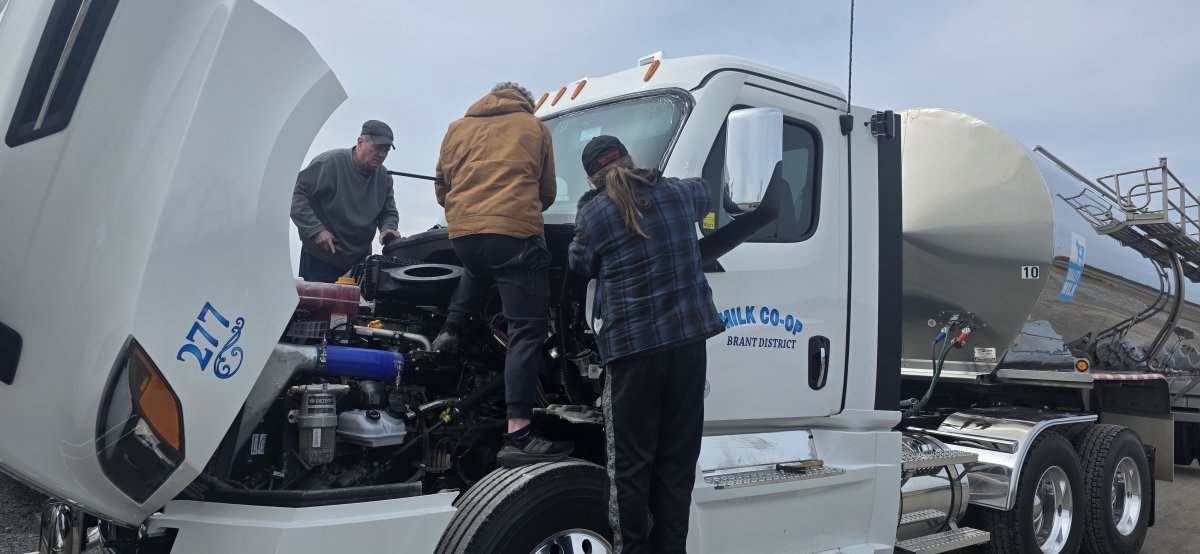
Running your own wash operation means buying pressure equipment, hoses, and cleaning supplies. It means allocating a bay, managing wastewater, and paying staff for wash hours instead of productive work. Add equipment maintenance, water and utility costs, and the liability of handling runoff correctly. Many operators underestimate the labor line most of all, and almost all of them leave the downtime line out entirely.
The Three-Way Cost Line-Up
| Cost Line | In-House | Fixed Facility | Mobile On-Site |
|---|---|---|---|
| Equipment purchase | Upfront capital | None | None |
| Labor hours | Paid wash crew | Driver travel and wait time | None |
| Travel time and mileage | None (on site) | Driver hours each way | None |
| Water and runoff handling | Your responsibility | Facility's responsibility | Handled by vendor |
| Equipment maintenance | Ongoing | None | Vendor's cost |
| Scheduling flexibility | Limited to staff hours | Limited to facility hours | Flexible, including weekends |
| Downtime | Vehicles leave site | Vehicles leave site | On-site service |
| Per-unit price visibility | Internal cost only | Posted or quoted rate | Quoted per-vehicle rate |
The facility option looks cheap on the posted rate but hides the cost of getting there: two driver-hours per round trip, mileage, and queue time. The in-house option looks cheap on supplies but hides capital, compliance, and idle bay time. Mobile service folds travel, water, and runoff handling into one quoted rate, which is why the comparison has to be total cost versus total cost.
Where Each Option Wins
In-house wins when a bay already exists, runs near capacity, and the fleet is large enough to keep a wash crew busy. A fixed facility wins when vehicles pass it on regular routes and queue times are short.
Watch out: comparing a mobile quote to a facility's posted rate without adding driver travel and queue time is the most common error in this decision. Add those hours before you compare.
Outsourcing can replace fixed costs with a service quote, without staffing a wash crew. If you want to see how we handle this for commercial clients, you can read more about our team and how we approach fleet work.
Building a Fleet Washing Cost Calculator for Your Operation
A fleet washing cost calculator is a simple worksheet that adds up what you spend now and compares it to a quoted service. You do not need software. You need honest inputs and one formula applied consistently to every option.
Start with these fields:
- Labor cost per wash: hours spent washing multiplied by the loaded hourly rate.
- Travel time: hours driving to and from a wash bay, times the same rate.
- Downtime value: revenue lost per vehicle per hour out of service.
- Equipment and supplies: annual spend divided by washes per year.
- Water and runoff compliance costs: utilities plus any containment handling.
- Repair spend tied to corrosion: bodywork and undercarriage repairs from a documented period.
The Formula
Annual in-house cost = (labor hours + travel hours) × loaded hourly rate × vehicles × washes per year + equipment and supplies + water and compliance + corrosion repair spend + (downtime hours × revenue per vehicle-hour × vehicles × washes per year).
Annual outsourced cost = quoted per-vehicle rate × vehicles × washes per year + any travel or minimum fees + your internal coordination time.
The comparison only works if both sides use the same wash frequency and the same scope. A quote that excludes undercarriage washing is not cheaper, it is a smaller job.
A Worked Example for a 20-Vehicle Fleet
Picture a 20-vehicle fleet washed twice a month, or 24 cycles a year.
- Labor and travel: 2 hours × $32 × 20 vehicles × 24 cycles = $30,720
- Downtime: 2 hours × $60 × 20 vehicles × 24 cycles = $57,600
- Equipment, supplies, water, and compliance: assume $9,000 a year
- Corrosion-related repair spend: assume $6,000 a year
That puts the in-house total near $103,320 a year, or roughly $215 per vehicle per wash once every cost line is counted.
Watch out: the downtime line is the one operators most often leave at zero. If your vehicles earn revenue, an hour in a wash queue has a cost even when no invoice is cut for it.
Break-Even by Fleet Size
Mobile service tends to break even earliest for small and mid-size fleets that cannot justify a dedicated wash bay, a runoff containment system, and a paid wash crew. As fleet size grows, the fixed cost of in-house equipment spreads across more units, so the crossover point depends on utilization: a bay that runs near capacity can beat outsourced pricing, while a bay that sits idle between cycles rarely does.
To get an accurate figure for your fleet, request a quote and compare it against your worksheet total.
Annual in-house fleet washing cost lines for a 20-vehicle fleet
Commercial Truck Wash Frequency and the Maintenance Payoff
Commercial truck wash frequency is where savings compound or evaporate. Wash too rarely and salt, brake dust, and road film sit on the chassis long enough to start corrosion. Wash on a sensible schedule and you interrupt that cycle before it becomes a repair bill.
A practical starting point for most fleets:
- Winter months: more frequent exterior and undercarriage washes to clear road salt.
- Summer months: regular exterior cleaning to protect paint and glass, with chassis washes at a longer interval.
- After off-road or industrial site work: an immediate wash to remove abrasive grit.
The thing nobody tells you about wash frequency is that consistency matters more than intensity. For context on why corrosion control pays off, the Canadian Centre for Occupational Health and Safety publishes guidance on workplace hazard prevention that reflects the same principle: stop the problem early and you spend less later.
Where the Savings Actually Land: Corrosion, Repairs and Resale
Corrosion prevention is the quiet engine behind fleet washing savings. Road salt and winter grime attack the undercarriage, wheel wells, and body seams first.
The repair bills that follow are rarely small. Bodywork, brake line replacement, and undercarriage repair all cost more than a wash schedule.
Glass is part of the same equation. Our mobile windshield repair and replacement service comes to your yard so a chip gets handled before it becomes a cracked pane and a vehicle off the road.
What to Check in a Wash Vendor Quote Before You Sign
A wash vendor quote should be readable in under five minutes. If it is not, that is your first warning.
Check these before you commit:
- What is included: exterior only, or wheels, wells, and undercarriage too?
- Per-vehicle pricing clarity: is the rate fixed or does it change by vehicle type?
- Service area and travel: are travel costs built in or added later?
- Scheduling terms: can you get weekend service and emergency call-outs?
- Runoff and compliance handling: who is responsible for wastewater?
- Liability insurance: is the vendor covered, and can they show proof?
- Water source: do they bring their own, or rely on your site?
Watch out: a low per-unit rate that excludes undercarriage washing or travel is not a saving. It is a smaller scope. Compare quotes on identical scope or the numbers mean nothing.
Book an On-Site Fleet Wash Assessment
The fastest way to turn this into real numbers is an on-site assessment.
Sparkle & Restore brings mobile wash services directly to your location, so vehicles stay on site and downtime stays low.
You can browse our full service lineup or contact us directly to set up your assessment.
Fleets that treat washing as a scheduled maintenance line, not a cosmetic extra, are the ones that avoid the big corrosion and glass repair bills.
Frequently Asked Questions
How much does mobile fleet washing cost?
Pricing depends on fleet size, vehicle type, wash frequency and site access, so most vendors quote per vehicle rather than a flat rate. A wash vendor typically factors in travel time, water and wastewater handling, and the level of clean you need (exterior only versus full unit). Rather than guess, ask for a written service quote broken down by vehicle class and confirm what is included, such as wheel cleaning, bug removal and runoff compliance. Sparkle & Restore can provide a quote based on your fleet profile.
Is mobile fleet washing cheaper than washing trucks in-house?
It often is once you count the full picture. In-house washing carries labour hours, equipment costs, equipment maintenance, water and runoff handling, and vehicle downtime while units sit in the wash bay. Outsourcing replaces those line items with a per-vehicle price and on-site service, so the trucks stay in rotation. Whether it is cheaper for you depends on fleet size and how many labour hours your team currently loses to cleaning. Run the numbers on total cost, not just the wash line.
How do you calculate fleet washing cost savings?
Start with your current in-house cost: labour hours multiplied by loaded wage, plus equipment, water, wastewater and downtime. Then get a per-vehicle quote from a mobile provider and multiply by your fleet size and wash frequency. The difference is your gross saving. Add the maintenance side, since regular cleaning supports corrosion prevention and can reduce repair bills and extend vehicle lifespan. A simple spreadsheet with these inputs works well, and most operators find the break-even point falls quickly as fleet size grows.
How often should a commercial fleet be washed?
Wash frequency depends on how the vehicles are used and what they are exposed to. Highway fleets often do well on a biweekly schedule, while units running winter roads or industrial sites may need weekly service to control salt and grime. Whatever the interval, consistency matters more than the occasional deep clean. A written maintenance schedule tied to your wash frequency keeps corrosion prevention on track and makes budgeting predictable. Ask any provider about scheduling options to avoid pulling trucks out of service.