 blog
Is Soft Washing Better Than Pressure Washing for Homes?
Last Updated: October 27, 2026
Quick Summary
Soft washing is generally better for homes because it uses low pressure and a cleaning solution, which protects siding, roofs and painted surfaces while killing algae and mould at the root. Pressure washing suits hard surfaces like concrete and brick but can damage siding, shingles and paint.
- Soft washing uses low pressure and a cleaning solution, while pressure washing relies on high-pressure water force.
- Never pressure wash an asphalt shingle roof, because granules loosen and shingle life shortens.
- Soft washing kills algae and mould at the root, so cleaning lasts longer than pressure washing achieves.
- Pressure washing suits concrete driveways and walkways, which tolerate force well.
- Pre-wet surrounding plants before applying solution, and rinse them again afterward.
Table of Contents
- Soft Washing vs Pressure Washing: Side-by-Side Comparison
- Which Method Suits Each Home Surface
- Soft Washing a House: The Process and Solution Ingredients
- Soft Washing Cost for a House and What Affects the Price
- DIY Versus Professional Exterior Cleaning
- Frequently Asked Questions
Soft washing vs pressure washing for homes is a choice most homeowners face once the siding starts to look grey and the driveway is green with algae. Pressure washing uses high water pressure to blast dirt off a surface. Soft washing uses low pressure and a cleaning solution.
Pressure washing is the older and more familiar method. A machine pushes water through a narrow nozzle, often at high PSI, and the force strips away loose dirt, grime and paint. It works well on hard, durable surfaces like concrete and brick. Soft washing is different.
Pressure washing is cleaning with high-pressure water to remove dirt, stains and loose material from hard surfaces.
Soft washing is cleaning with low-pressure water and a cleaning solution.
Here is the practical split. Pressure washing relies on force. Soft washing relies on time and chemistry.
Soft Washing vs Pressure Washing: Side-by-Side Comparison
| Factor | Pressure Washing | Soft Washing |
|---|---|---|
| Water pressure | High | Low |
| Cleaning method | Force from the spray | Solution plus dwell time |
| Best for | Concrete, brick, hard surfaces | Siding, roofs, painted and wood surfaces |
| Organic growth (algae, mould) | Removes surface growth only | Kills growth at the root |
| Damage risk to siding and shingles | Higher | Lower |
| Typical use | Driveways, walkways, patios | Whole-house exterior, roofs |
Pros of pressure washing:
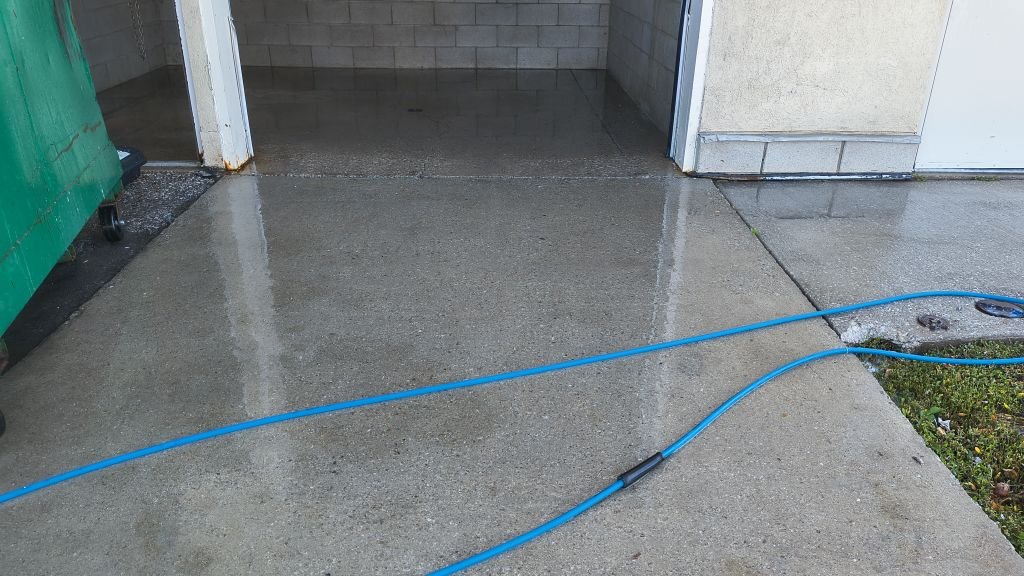
- Fast on large, hard surfaces
- Strong at removing stubborn dirt and old paint residue
- Widely available equipment
Cons of pressure washing:
- Can etch wood, chip paint and force water behind siding
- Removes growth but the stains often return quickly
Pros of soft washing:
- Gentle on siding, roofing, and painted surfaces
- Kills algae and mould, so cleaning lasts longer
- Protects plants when the solution is applied correctly
Cons of soft washing:
- Takes longer because dwell time is required
- Needs proper dilution and runoff planning
Choosing a cleaning method depends on what you are cleaning.
Which Method Suits Each Home Surface
| Surface | Preferred method | Why | Watch for |
|---|---|---|---|
| Vinyl siding | Soft wash | Force can lift panel seams and force water behind the wall | Chalking on older vinyl; keep pressure low even on rinse |
| Painted wood siding | Soft wash | High pressure chips and feathers paint | Check for peeling or bare wood before washing; soft wash only |
| Fibre cement siding | Soft wash | Material is durable but joints and caulking are not | Cracked caulk lines let water in |
| Stucco | Soft wash | Force can crack the finish coat and open hairline cracks | Existing cracks should be sealed first |
| Brick and masonry | Pressure wash at moderate settings, or soft wash for organic growth | Brick tolerates force; mortar and efflorescence need care | Test mortar softness in an inconspicuous spot first |
| Concrete driveway or walkway | Pressure wash | Concrete tolerates force and dirt sits on top | Avoid etching decorative or sealed concrete |
| Asphalt shingle roof | Soft wash only | Granules loosen under pressure and shingle life shortens | Never pressure wash a shingle roof |
| Wood deck | Soft wash | Preserves grain and avoids splintering | Re-seal after cleaning once the wood dries |
| Composite deck | Soft wash or low-pressure rinse | Manufacturers typically specify low pressure | Check the manufacturer's cleaning instructions |
| Concrete patio | Pressure wash | Same logic as a driveway | Watch for painted or stained finishes |
Siding and Exterior Walls
For brick and masonry, pressure washing at moderate settings is often acceptable, but the mortar should be checked first. A simple scratch test in an inconspicuous spot tells you whether the mortar is soft and friable; if it crumbles easily, soft washing is the safer route. Efflorescence, the white powdery staining on brick, is a salt deposit, not organic growth, and responds better to a masonry-specific treatment than to either method alone.
Roofs, Decks, and Driveways
Driveways and walkways are the classic pressure washing surface because concrete tolerates force well and the dirt sits on top of the surface. Decorative concrete, stamped concrete, and sealed finishes are the exception; force can etch the surface or dull the sealer, so lower pressure and a wider nozzle are the safer choice.
Contact us at (905) 681-7688 →
Soft Washing a House: The Process and Solution Ingredients
A full soft wash follows a predictable sequence, but the details of dilution, dwell time, and plant protection are where most comparisons stop short. Here is what actually happens on a typical house.
The sequence
First, the technician wets surrounding plants and shields windows and electrical fixtures. Pre-wetting plants is not cosmetic, it dilutes any overspray before it can draw moisture out of leaf tissue. Next, a cleaning solution is applied from the bottom up so streaks do not run into dry areas. The solution is then left to dwell, usually for several minutes, while it works on the growth. Finally, the surface is rinsed gently from the top down, and plants are rinsed again afterward.
What is in the solution
Most soft-wash solutions combine a sodium hypochlorite base with surfactants and a mild cleaner. The surfactant helps the solution cling to vertical surfaces instead of running off, which is why a soft wash can clean siding that a plain water rinse would only wet. Some mixes add a small amount of a mild acid or a commercial detergent to break down dirt and oxidation. The exact recipe varies by provider and by surface.
Dilution and dwell time
A common mistake is rinsing too early. If the solution is washed off before the dwell time ends, the algae returns within weeks. Good technicians watch the surface, not the clock alone.
Protecting plants and managing runoff
Plant protection is a two-step process: pre-wet before application, and rinse after. Pre-wetting dilutes any drift, and a post-wash rinse washes residual solution off leaves and soil. Covering or shielding sensitive shrubs and flower beds is common on tighter properties. Runoff should be directed away from storm drains where local rules require it, and many municipalities have restrictions on what can enter the storm sewer system. Check local bylaws before washing near a drain, and keep pets and people off treated surfaces until they are dry.
Weather and timing
Soft washing works best on a mild, overcast day. Wind carries overspray onto cars, windows, and neighboring properties, and hot sun dries the solution before it can work. Rain during or immediately after a wash dilutes the solution and can leave streaks, so most crews schedule around the forecast rather than risk a re-wash.
Soft Washing Cost for a House and What Affects the Price
For a quote for your home, contact us at (905) 681-7688.
DIY Versus Professional Exterior Cleaning
Our team at Sparkle & Restore can assess your home's exterior and recommend the right method for each surface. Contact us at (905) 681-7688 to book a soft wash assessment.
Frequently Asked Questions
Is soft washing safer than pressure washing for siding?
For most vinyl, painted and wood siding, yes. Soft washing relies on low-pressure water and a cleaning solution that breaks down algae, mould, mildew and dirt, so there is less risk of forcing water behind the cladding, chipping paint or etching the surface. High-pressure spray can gouge softer materials and drive water into seams, which can lead to moisture problems later. Surfaces that are already damaged or very old should be assessed before any method is chosen, because even gentle cleaning can expose existing weaknesses.
Which surfaces should not be pressure washed?
Avoid high-pressure washing on vinyl siding, painted wood, stucco, older brick mortar, asphalt shingles and soft or aged wood decking. These materials can be etched, stripped or pushed out of place by concentrated spray. Concrete driveways and walkways generally tolerate pressure washing well, and many homeowners use it there for heavy grime. A quick test in an inconspicuous spot helps confirm what a surface can handle before cleaning the full area.
How often should you soft wash a house?
Most homes in Ontario benefit from soft washing about once a year, usually in spring or early fall after the seasonal buildup of algae, pollen and dirt. Shaded north-facing walls, roofs under trees and areas near gardens may need attention every six to twelve months. Regular cleaning keeps organic growth from taking hold, which makes each session quicker and gentler on the surface. Your schedule should reflect the condition you see, not just the calendar.
Can pressure washing damage a home's exterior?
Yes. Pressure washing can strip paint, chip wood, loosen shingles, etch vinyl and force water behind siding or under flashing. Damage is most likely when the nozzle is held close to the surface, when a narrow-angle tip is used, or when the operator is inexperienced with a particular material. Soft washing reduces these risks by using low pressure and a dwell-time cleaning solution, though the right approach still depends on the material and its condition.
Exterior cleaning should protect your home, not damage it. If you want a clear answer for your siding, roof and driveway, book a soft wash assessment with the Sparkle & Restore team, or explore our residential exterior cleaning services to see what we cover for homes across the region.