 Ultimate guide
Industrial Loading Dock Deep Cleaning Methods That Work
Quick Summary
Industrial loading dock deep cleaning methods remove oil, grease, salt, packaging debris and built-up grime from dock floors, plates, levelers, seals and walls on a scheduled basis. Effective deep cleaning combines a traffic-based schedule with surface-specific pressure washing, degreasing and wastewater containment.
- Deep clean docks on a fixed schedule, quarterly or semi-annually, not only after visible buildup appears.
- Clean from the top of the dock down and from the least sensitive components to the most sensitive.
- Use lower pressure and a wide spray near dock plate hinges, pivot points and electrical components.
- Use only pH-neutral cleaners on rubber dock seals and foam pads to avoid damage.
- Capture pressure washing runoff with a berm or drain cover so degreaser never reaches a storm drain.
Table of Contents
- Why Loading Dock Deep Cleaning Matters for Industrial Facilities
- Building a Loading Dock Cleaning Schedule Based on Traffic
- Loading Dock Pressure Washing: Surface-by-Surface Steps
- Industrial Floor Degreasing: Removing Oil, Grease and Residue
- Choosing Cleaning Chemicals, Equipment and Wastewater Controls
- Loading Dock Cleaning Checklist and Safety Procedures
- Booking Your Loading Dock Deep Clean With Sparkle & Restore
- Frequently Asked Questions
Why Loading Dock Deep Cleaning Matters for Industrial Facilities
Loading dock deep cleaning is the scheduled removal of oil, grease, salt, packaging debris and built-up grime from dock floors, dock plates, levelers, seals and walls, and it is one of the most reliable ways to apply industrial loading dock deep cleaning methods consistently.
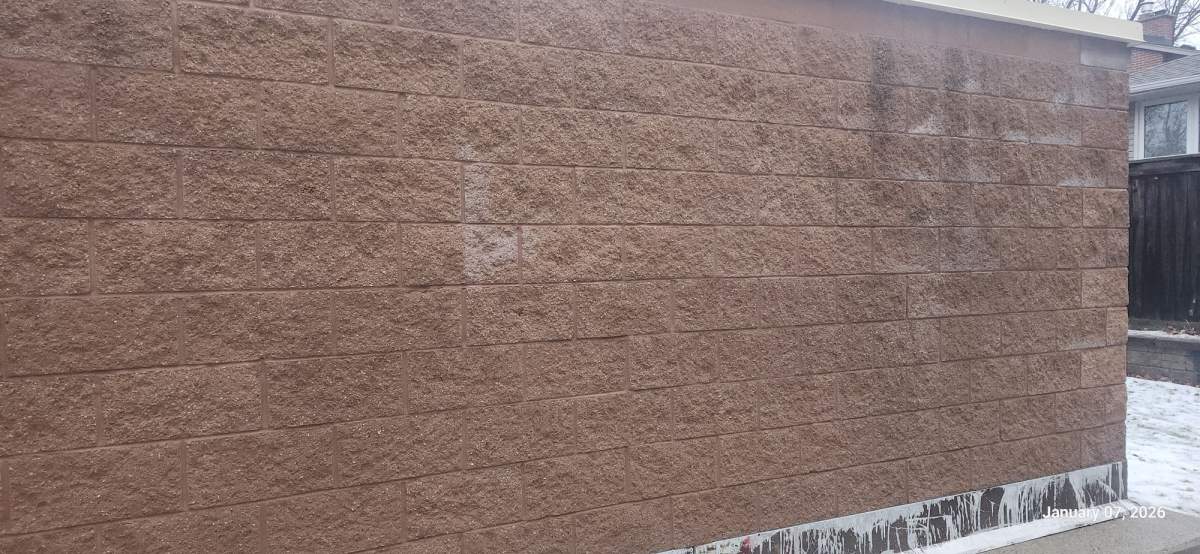
Neglected docks create three problems at once. Residue builds into slip hazards, mechanical components seize or corrode from trapped moisture and grit, and rubber dock seals degrade faster than their rated life. A dock leveler that will not lower smoothly is usually a maintenance issue that started as a cleaning issue.
Deep cleaning also protects the building itself. Concrete that absorbs oil stains becomes harder to restore, and salt residue from winter traffic accelerates corrosion on steel edging and dock plate hinges.
Industrial operations in Ontario also need to keep wastewater and runoff under control. A deep clean that sends degreaser into a storm drain creates a compliance problem.
Building a Loading Dock Cleaning Schedule Based on Traffic
A practical loading dock cleaning schedule matches cleaning frequency to traffic volume, product type and the amount of residue each shipment leaves behind.
The most workable structure has three layers:
- Daily: sweeping and debris removal at the dock face and in the approach, plus a spot check for spills and leaks
- Weekly: targeted cleaning of high-contact areas, including the dock plate surface, leveler lip and seal edges
- Quarterly or semi-annually: full deep cleaning with pressure washing, degreasing and inspection of mechanical components
Adjust these intervals upward for facilities handling oily, dusty or salt-heavy freight, and for any dock exposed to winter conditions.
Watch out: Scheduling deep cleans only after visible buildup appears means the residue has already bonded to the concrete and damaged the seals. Fixed intervals prevent this more reliably than reactive cleaning.
Loading Dock Pressure Washing: Surface-by-Surface Steps
Pressure washing is a core method among industrial loading dock deep cleaning methods, but the correct approach changes with each material and component. For broader context on equipment and methods, see commercial pressure washing guide.
Clear pallets, debris and any staged freight first, then sweep loose material into a collection area before applying water. Set up wastewater capture before the first drop of water hits the floor, because once degreaser and oil are in the runoff, containment becomes far harder.
Concrete Dock Floors and Approaches
Pre-wet the concrete to reduce how quickly detergent dries on the surface. Apply a degreaser suited to concrete, let it dwell for the manufacturer's recommended time, then agitate stubborn areas with a rotary surface cleaner or stiff brush.
For heavy buildup, divide the floor into manageable sections and complete each section through dwell, agitation, extraction and rinse before moving on. This prevents detergent from drying on one area while you work another, and it keeps the runoff manageable.
Dock Plates and Levelers
Dock plates and levelers need a gentler approach. Use lower pressure and a wider spray pattern, and keep the wand away from hinges, pivot points and electrical components. Work from the hinge side outward so grit is pushed away from the pivot rather than into it. Wipe steel surfaces after rinsing to remove grit that would otherwise sit in the pivot areas and accelerate wear. Inspect the lip and hinge for cracking or looseness while the surface is clean and dry.
Dock Seals and Foam Pads
Rubber dock seals and foam pads are sensitive to strong degreasers and high pressure. Use a pH-neutral cleaner and a soft brush, and rinse thoroughly. Work from the top of the seal down so dirty water does not streak clean rubber. Check for tears, compression set and separation from the frame as you clean, since these are the failure points that let weather and pests into the building.
Dock Walls and Surrounding Areas
Dock walls can usually handle more pressure than seals, but check for loose fasteners and damaged paint as you work. Clean from the top of the wall down, and pay attention to the wall-floor junction where debris and runoff collect. Around the dock opening, clean light fixtures, bumpers and guard posts with a lower-pressure rinse to avoid forcing water into electrical enclosures or behind mounted hardware.
Dock Pits, Sumps and Drains
Pits, sumps and drains collect the heaviest residue and are the most commonly skipped components. Remove standing water and sludge first, then clean the pit walls and floor with a degreaser and moderate pressure.
Watch out: Pressure washing directly into leveler pivots, electrical boxes or pit-mounted components pushes water and grit into parts that are difficult to dry and easy to damage.
The right approach varies by surface, so the article breaks the work down by component as follows.
| Surface | Approach | Key caution |
|---|---|---|
| Concrete dock floors | Pre-wet, degreaser dwell, rotary cleaner, fan-tip rinse | Keep wand angle shallow to avoid etching |
| Dock plates and levelers | Lower pressure, wide spray, hinge side outward | Keep wand away from hinges and electrics |
| Dock seals and foam pads | pH-neutral cleaner, soft brush, top to bottom | Strong degreasers and high pressure damage rubber |
| Dock walls | Clean top down, check fasteners and paint | Attention to wall-floor junction |
| Pits, sumps and drains | Remove standing water first, clear grates | Jet vacuum helps where pressure washing cannot empty |
Industrial Floor Degreasing: Removing Oil, Grease and Residue
Degreasing is the step that separates a surface that looks clean from one that is actually clean.
Identify the residue first. For guidance on removing marks and stains from surfaces, see the property owner's guide on stain removal.
Apply the degreaser generously and allow adequate dwell time without letting it dry on the surface.
For deeply saturated concrete, a single application rarely reaches the full depth of the stain. Plan for repeated passes on problem areas and accept that some staining may be permanent.
Choosing Cleaning Chemicals, Equipment and Wastewater Controls
Chemical selection depends on the surface, the residue and what the facility can legally discharge.
Match the chemistry to the soil. Petroleum-based oil and grease respond well to alkaline degreasers.
Dilution and dwell time matter as much as the product.
Keep a short list of approved chemicals with their intended surfaces, dilution ratios and dwell times.
Equipment choice follows the scale of the job.
Wastewater control is the part many facilities underestimate.
Watch out: A degreaser that is safe for the floor may still be prohibited in the discharge stream.
Loading Dock Cleaning Checklist and Safety Procedures
Use this checklist to structure each deep clean and to confirm the job was done properly. It works as a reference for internal crews and as a briefing document for any outside contractor you bring in.
- Notify operations and schedule the dock out of service for the cleaning window
- Lock out dock levelers and secure dock plates according to your lockout procedure
- Clear pallets, debris and staged freight from the work area
- Sweep loose debris and dispose of it in the correct waste stream
- Set up wastewater capture, berms or drain covers
- Confirm chemical compatibility for each surface before application
- Apply degreaser and allow the recommended dwell time
- Pressure wash top to bottom, adjusting pressure for each material
- Extract or squeegee dissolved residue before final rinse
- Inspect dock seals, levelers, hinges and fasteners for damage or wear
- Verify floor is dry and free of slip hazards before returning the dock to service
- Record the date, surfaces cleaned, chemicals used and any damage found
Crews should wear chemical-resistant gloves, eye protection, non-slip footwear and hearing protection when running equipment. Assess the work area for trip hazards, overhead clearances and electrical exposure before starting. Lockout procedures must be followed for any leveler or dock plate that is being cleaned, and no one should work under an unsupported dock plate.
Booking Your Loading Dock Deep Clean With Sparkle & Restore
If your facility needs a loading dock deep clean and you would rather hand the work to a team that already runs these procedures, Sparkle & Restore provides mobile pressure washing for industrial and commercial sites. Contact the team to discuss the scope of your job.
For current pricing, contact us at (905) 681-7688 or request a quote through our website. Pricing depends on quantity, dates, and delivery.
Frequently Asked Questions
How do you deep clean an industrial loading dock?
Start by clearing debris and sweeping the dock floor, then degrease oil and grease spots with an industrial degreaser. Next, pressure wash the concrete from the back wall toward the drain, working in sections. Clean dock plates, levelers and seals by hand with a suitable cleaner, rinse thoroughly, and capture all wastewater. Finish with a visual check and document the result so the next cleaning can be verified against the same standard.
What equipment is needed to clean a loading dock?
Most jobs need a push broom or industrial sweeper, a pressure washer with adjustable nozzles, a surface cleaner attachment for concrete, a stiff wire brush for stubborn grime, and a wet vacuum or jet vacuum for water recovery. Degreasing work also requires a foaming sprayer, rubber gloves, eye protection and a squeegee. Equipment choice depends on floor area, traffic volume and how heavily oil has built up.
Can you pressure wash an industrial loading dock?
Yes. Pressure washing is one of the most effective methods for concrete dock floors, aprons and dock walls, provided the pressure and nozzle are matched to the surface. Keep higher pressures away from dock seals, electrical components and hydraulic parts of levelers, and use lower-pressure rinsing near them. Always contain runoff, because oily water cannot go straight into a storm drain.
How often should a loading dock be deep cleaned?
Frequency depends on traffic volume, the type of goods handled and how much oil, salt or packaging debris reaches the floor. High-traffic docks often need daily sweeping, weekly rinsing and a full deep clean every one to three months. Lower-traffic facilities may schedule deep cleans quarterly. Adjust the schedule after each inspection if grease build-up or slip hazards keep returning.
What cleaning products are safe for loading dock floors?
Concrete responds well to alkaline industrial degreasers that are rated for oil removal, and to neutral cleaners for routine maintenance. Avoid acid-based products on concrete unless a specialist recommends them, and never mix chemicals. Check that any product is compatible with rubber dock seals and painted surfaces. Review the product's safety data sheet, which is required under the Workplace Hazardous Materials Information System (WHMIS) in Canada.
How do you clean oil and grease from a loading dock?
Absorb fresh spills first with granular absorbent to prevent spreading. Apply a degreaser to the stained area, let it dwell for the manufacturer's recommended time, then scrub with a stiff brush or mechanical scrubber. Rinse with hot water pressure washing where appropriate, and recover the wastewater with a vacuum. Repeat on stubborn spots, since heavy oil stains may need several applications.
What safety precautions should workers take when cleaning a loading dock?
Use slip-resistant footwear, gloves, eye protection and hearing protection around pressure washers. Lock out dock levelers and trailer restraints before anyone works beneath or near them. Keep trucks and forklifts clear of the cleaning zone, use wet floor signage, and review chemical hazards before work starts. Ontario employers must follow the Occupational Health and Safety Act and its regulations for hazard assessment and training.
How long does it take to deep clean a loading dock?
A typical deep clean of a single dock bay can take a half day to a full day, depending on size, grease build-up and the number of dock plates and levelers. Degreasing and drying time add to the schedule, so plan around operating hours where possible. Pricing depends on dock count, access, schedule and scope, so request a quote from Sparkle & Restore at (905) 681-7688 for an accurate estimate.