 How-to
Windshield Chip Repair Hamilton: What to Do Before It Spreads
Last Updated: November 21, 2026
Quick Summary
Windshield chip repair in Hamilton should be booked within the first 24 hours, because freeze-thaw cycles can turn a stable chip into a spreading crack overnight. Cover the chip with clear tape, avoid slamming doors and skip the car wash until a technician assesses it. Most single-chip repairs take around twenty to forty minutes.
- Cover the chip with clear tape to keep dust and water out before assessment.
- Damage in the driver's line of sight or within a few centimetres of the edge usually means replacement.
- Resin injection involves cleaning, vacuuming, injecting resin, UV curing and polishing flush.
- A repair restores structural integrity but a faint mark often remains, which is normal.
- Mobile units treat multiple fleet vehicles in one on-site visit, avoiding replacements.
Table of Contents
- Windshield Chip Repair Hamilton: What to Do in the First 24 Hours
- How to Assess a Chip: Size, Depth, and Repair Eligibility
- Windshield Repair vs. Replacement: How the Decision Is Made
- What Happens During Resin Injection and Curing
- Windshield Chip Repair Time: What to Expect at the Shop or On Site
- Mobile Windshield Chip Repair for Fleets and Property Managers
- Windshield Camera Calibration After Repair
- Book a Chip Repair Before the Damage Spreads
- Frequently Asked Questions
Windshield Chip Repair Hamilton: What to Do in the First 24 Hours
A rock chip is a small problem with a short window for a cheap fix. Freeze-thaw cycles in winter can turn a stable chip into a spreading crack faster than most drivers expect, and once a crack runs past a few centimetres, windshield chip repair is usually no longer an option. This guide covers what to do in the first day, how to judge whether the damage is repairable, and what the process generally involves.
The first rule is simple: don't wait for a convenient day. A chip that looks harmless on a mild afternoon can split overnight when the temperature drops. Cover it with clear tape to keep dust and water out, avoid slamming doors, and skip the car wash until it's assessed.
Why does timing matter so much? Because resin bonds best to clean, dry, undamaged glass. Contamination is the enemy of a lasting repair.
Why Temperature Swings Make Chips Spread
Glass expands and contracts with temperature, and a chip is a weak point where stress concentrates. A windshield that bakes in a parking lot and then cools sharply can flex enough to turn a chip into a crack in a single day. Running the defroster on full heat against a frozen windshield does the same thing in reverse.
Watch out: blasting the defroster at maximum heat on a cold morning is one of the most common ways drivers turn a repairable chip into a full replacement.
How to Assess a Chip: Size, Depth, and Repair Eligibility
Many small chips with no crack running out from them are candidates for repair. Anything larger, or any damage in the driver's direct line of sight, usually points toward replacement. But size alone is a crude filter. The decision also depends on depth, shape, location, and whether the damage is stable or spreading.
Here's how to run a quick assessment yourself before you call anyone:
- Size: Measure the damaged area. Larger damage or a crack longer than a few centimetres usually calls for replacement. Location matters as much as size.
- Depth: Run a fingernail across the spot. If it catches, the damage has penetrated the outer glass layer. If you can see a dark shadow or a milky haze under the surface, the inner layer may be involved, which is a replacement conversation.
- Location: Damage in the driver's line of sight, or within a few centimetres of the windshield edge, is usually a replacement conversation. Edge damage weakens the bond between glass and frame, and sight-line damage can distort vision even after repair.
- Type: A clean round chip, a small star, or a bullseye is more repairable than a long crack, a combination break, or a piece of glass that has started to pit. A pit with missing glass may need extra resin and polishing.
- Spread: Has it grown since you noticed it? Growing damage needs attention today. A chip that has been stable for weeks is lower risk than one that changed size overnight.
What you can safely assess yourself is limited to size, location, and whether the damage is spreading. What you cannot reliably judge is whether moisture or contamination has entered the break, whether the inner glass layer is compromised, or whether the damage sits in a stress zone near the edge. Those require a technician's inspection light and experience. If you are unsure, treat the chip as repairable until a professional says otherwise, because early assessment is cheaper than replacement.
When a Chip Cannot Be Repaired
Some damage is beyond resin. Cracks that run longer than a few centimetres, damage directly in the driver's sight line, chips at the very edge of the glass, and any spot where the inner glass layer is compromised all call for replacement. A repair on those will hold cosmetically for a while and then fail.
The honest answer, which most guides skip: a repair restores structural integrity and stops the spread, but it rarely makes the chip invisible. Expect a faint mark to remain. A good repair leaves the glass smooth and stable, but the optical distortion of the original break may still be visible at certain angles. That is normal, and it is not a sign the repair failed.
Windshield Repair vs. Replacement: How the Decision Is Made
The choice comes down to three factors: size, location, and whether the damage has reached the glass layers that carry load. Repair injects resin into the break and cures it. Replacement swaps the entire pane.
| Factor | Repair Is Usually Right | Replacement Is Usually Right |
|---|---|---|
| Size | Smaller than a coin | Larger than a coin, or a long crack |
| Location | Outside the driver's sight line | In the driver's line of sight |
| Edge distance | Well inside the glass | Within a few centimetres of the edge |
| Depth | Outer layer only | Inner layer compromised |
| Spread | Stable | Actively growing |
Repair costs less, takes minutes rather than hours, and keeps the original factory seal. Replacement is the only safe route when the glass has lost structural integrity. For a deeper look at how the two compare, contact our team and we'll walk you through which applies to your vehicle.
What Happens During Resin Injection and Curing
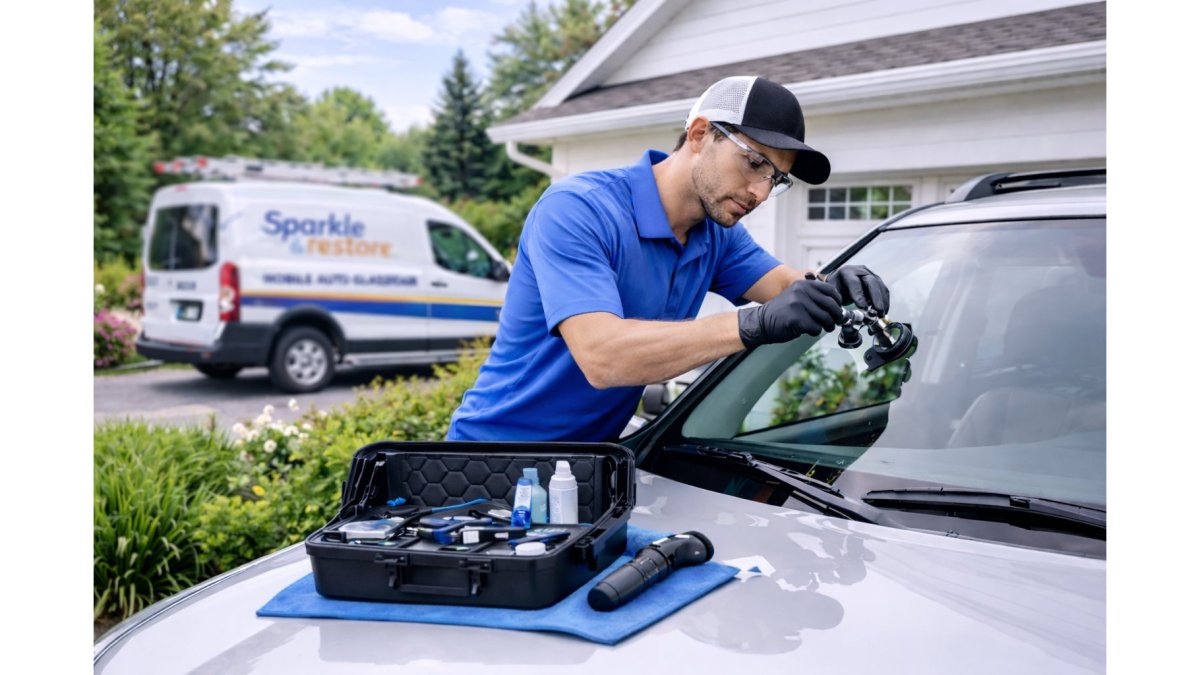
Resin injection is a controlled process: the technician cleans the break, pulls a vacuum to remove air and moisture, injects a clear resin matched to the glass, then cures it with UV light and polishes the surface flush. Each step exists for a reason, and skipping any one of them shortens the life of the repair.
Repair resins are generally formulated to approximate the refractive index of auto glass, so light passes through them similarly to the surrounding glass. That is why a good repair is less visible than the original chip.
The vacuum step is the one that separates a repair that lasts from one that fails. Pulling a vacuum draws trapped air and moisture out of the break before resin goes in.
Curing takes only a few minutes under UV. The technician trims or polishes the excess resin flush with the glass so the wiper does not catch on it. After polishing, the surface is smooth and the chip is stabilized.
What a repair can and cannot do is worth setting expectations on. A repair restores structural integrity, stops the spread, and keeps the original factory seal. It does not restore the glass to new condition. A faint outline, a slight shadow, or a small pit mark often remains, especially on larger or older chips.
Watch out: driving immediately after a repair is fine, but pressure washing the repaired area or slamming the hood shut within the first day can disturb resin that has not fully settled.
Windshield Chip Repair Time: What to Expect at the Shop or On Site
Most single-chip repairs take well under an hour, and many are finished in around twenty to forty minutes once the vehicle is in the bay. Multi-chip jobs or damage that needs extra curing time run longer.
Turnaround depends on three things: how many chips are being treated, whether the damage needs additional prep, and whether you're at a shop or using mobile service. A mobile unit carries the same resin and curing equipment, so the repair itself takes about the same time. What changes is the setup and teardown around it.
If you're planning a visit and want to confirm timing or location, get in touch with us before you arrive.
Mobile Windshield Chip Repair for Fleets and Property Managers
Mobile windshield chip repair is the same resin-based process delivered at your location, so vehicles stay on site and downtime drops to the length of a single repair. For a fleet, that difference compounds fast.
Consider the math property managers and fleet operators actually run. Sending five vehicles to a shop means five drivers off the road, five trips, and five waiting rooms. A mobile unit handles all five in one visit, in your lot, between shifts.
A common mistake is booking mobile repair only after damage has spread. The economics work the other way: catch chips early, treat several vehicles in one visit, and you avoid replacements entirely.
For a fresh chip, book mobile windshield repair and get it handled on site.
Windshield Camera Calibration After Repair
Windshield camera calibration is the process of realigning the driver-assistance cameras mounted behind the glass after a windshield is replaced. If your vehicle has lane-keeping, automatic emergency braking, or adaptive cruise control, the camera position matters to the millimetre.
Here's the part drivers miss: a chip repair doesn't move the glass, so calibration usually isn't needed. A full replacement does move it, and that's when calibration becomes essential. Skipping it can leave safety systems reading the road incorrectly.
Ask any glass provider one direct question before booking a replacement: can you calibrate the cameras on my vehicle, and is that included? If the answer is vague, keep asking. To see the full range of services behind this work, read about our operation.
Book a Chip Repair Before the Damage Spreads
The gap between a cheap repair and an expensive replacement is often measured in days, not months. If you've spotted a chip, the smart move is to get it assessed now rather than after the next cold snap.
At Sparkle & Restore, our mobile auto glass service brings fast, on-site chip repair to your location, helping minimize vehicle downtime. We also offer insurance claim assistance to help reduce out-of-pocket costs.
Get started with Sparkle & Restore and stop a small chip from becoming a full replacement. Call us at (905) 681-7688 or request a quote today.
A chip is easy to ignore until it isn't. The drivers and fleet managers who avoid replacement costs are the ones who treat a small chip as urgent. Sparkle & Restore brings mobile windshield chip repair to your location, with fast on-site service, insurance claim assistance, and scheduling built around your fleet. Get started with Sparkle & Restore and protect your glass before the next temperature swing.
Frequently Asked Questions
Can a small windshield chip be repaired instead of replacing the windshield?
Many small chips located away from the driver's line of sight and the windshield edge can be repaired with resin injection. A technician assesses size, depth, and location before confirming eligibility. Repair keeps the original factory seal, costs less than replacement, and usually takes under an hour. If the chip has spidered into multiple legs or sits directly in the driver's view, replacement is the safer call.
How long does windshield chip repair take?
A single chip repair typically takes 20 to 40 minutes from start to finish, including resin injection and curing. Multiple chips on the same vehicle add time, and some shops ask for an extra buffer so the resin fully sets before you drive.
Does insurance cover windshield chip repair?
Coverage depends on your policy and provider, so confirm the deductible and whether the work must be done by an approved shop. Ask for a written quote first, then check with your insurer before booking.
Does a windshield chip repair affect cameras or driver assistance systems?
Repairing a chip rarely disturbs the camera itself, but any work near the camera bracket or a full replacement usually requires windshield camera calibration afterward. Modern vehicles use the camera for lane keeping, automatic braking, and adaptive cruise, and a misaligned camera can affect how those systems behave. Ask whether your vehicle needs static or dynamic calibration and confirm the shop can perform it before the work starts.